.png)


The certification policy for courses offered by Financial Regulation Courses outlines the requirements students must meet to successfully complete their chosen certification programme. This policy aims to ensure the credibility and integrity of the certification process while maintaining the highest academic standards. It is designed to provide students with a clear understanding of the expectations for course completion, the final examination, and the certification issuance process.
This document covers essential aspects such as the completion of course modules, proctored final examinations, and the use of advanced invigilation technologies, including facial recognition, to ensure the authenticity and fairness of the examination process. The aim is to safeguard the integrity of the certification while providing a clear and structured path for students to achieve success.
The following sections provide a comprehensive breakdown of the requirements and procedures that must be followed to receive a Certificate of Completion from Financial Regulation Courses. While specific criteria may vary depending on the particular certification programme, the general framework applies to all students and certification programmes.
Before students are eligible to sit the final examination, they must successfully complete all course modules. Each module is designed to provide a thorough grounding in the subject matter and is essential in ensuring that students have the requisite knowledge and skills to perform well in the final assessment.
Course modules are divided into sections that systematically cover the relevant content areas. The typical structure includes:
Learning Objectives: Each module begins with a set of clearly defined learning objectives, outlining the key competencies and knowledge areas students are expected to master.
Instructional Materials: These may include text-based lessons, video lectures, case studies, and additional reading materials drawn from industry-standard texts and recent developments.
Interactive Quizzes: Most modules feature quizzes to help students assess their understanding of the material and identify areas requiring further review.
Assignments and Case Studies: Depending on the course, students may be required to complete assignments that apply theoretical concepts to practical, real-world scenarios.
Students must complete all required assessments, quizzes, and assignments within each module. These assessments may not directly contribute to the final grade, but they are critical in helping students measure their progress and readiness for the final exam. Successful completion of all course modules is a prerequisite for taking the final examination.
The order of the modules is structured to build progressively on the knowledge gained, ensuring students are fully prepared by the end of the course.
The final examination is a formal assessment designed to evaluate a student’s overall grasp of the course content. It serves as the culminating step in the certification process and determines whether the student meets the standards required for certification.
The structure of the final examination may differ between certification programmes, but it generally consists of:
Multiple-Choice Questions: These assess the student’s knowledge of key concepts and factual information.
Case-Based Questions: Some exams may include scenarios where students must apply their knowledge to practical problems or case studies, demonstrating their ability to think critically and apply course concepts to real-world situations.
Essay Questions: In some instances, students may be required to write short or long essays to explain complex concepts or offer detailed analyses of specific issues.
The final examination is designed to cover all the major themes and concepts introduced during the course. It provides a comprehensive test of a student’s understanding of the course material.
The content of the final examination will reflect the full range of material covered in the course. Key subject areas may include, but are not limited to:
Financial Regulations: Understanding regulatory frameworks, compliance requirements, and the roles of regulatory bodies such as the Financial Conduct Authority (FCA) and Prudential Regulation Authority (PRA).
Investment Analysis and Portfolio Management: Knowledge of financial models, risk management strategies, and investment frameworks.
Environmental, Social, and Governance (ESG) Standards: A solid grasp of ESG principles and their application to corporate governance and financial regulation.
To ensure the fairness and integrity of the final exam, students must adhere to the following guidelines:
Exam Format and Timing: Students will be informed of the exam format and time limits before the exam date. It is the student’s responsibility to ensure they complete the exam within the allocated time.
Closed-Book Examination: The final exam is typically a closed-book exam, meaning that students are not permitted to consult any external resources during the examination.
Technical Requirements: As exams are conducted online, students must ensure they have access to a reliable internet connection and meet the technical requirements specified by the course.
Maintaining the integrity of the final examination process is paramount. Financial Regulation Courses employs advanced proctoring technologies to ensure that students complete their exams fairly and in accordance with academic standards. This includes facial recognition technology and real-time screen monitoring to detect and prevent any attempts to cheat or undermine the exam process.
Facial recognition technology is used to verify the identity of students before and during the examination process. This technology ensures that the individual taking the exam is the same person who enrolled in the course and completed the modules.
Key Features of the System:
Initial Verification: At the start of the exam, students must verify their identity by taking a facial image, which is compared to the photograph provided during course registration.
Continuous Monitoring: The system continues to monitor the student’s face throughout the exam, flagging any anomalies such as the presence of other individuals or attempts to bypass the proctoring system.
Privacy and Data Security: All data collected through facial recognition technology is handled in compliance with data protection laws, ensuring the privacy and security of student information.
In addition to facial recognition, the proctoring system also includes screen monitoring to track the student’s computer activity during the exam. This technology ensures that students are not accessing unauthorised materials or websites.
Screen Monitoring Features:
Real-Time Observation: Proctors can view the student’s screen in real time, ensuring they remain within the exam’s permitted parameters.
Browser Restrictions: Some exams may include restrictions on opening additional browser windows or accessing the internet. Any violations of these rules will be flagged by the system.
Post-Exam Review: After the exam, a recording of the student’s screen activity will be reviewed to ensure no unauthorised actions occurred during the examination.
Ensuring that the person taking the final examination is the same person who completed the coursework is a critical part of the certification process. Financial Regulation Courses uses multi-factor authentication to confirm the identity of students before and during the exam.
At the beginning of the examination, students must verify their identity through several means:
Government-Issued Identification: Students are required to present a government-issued photo ID, such as a passport or driving licence, to confirm their identity.
Course Registration Details: The proctoring system will check that the student’s registration information matches the details of the person taking the exam.
Security Questions: Some exams may include additional security questions based on personal information provided during course registration.
In some cases, Financial Regulation Courses may employ additional authentication methods, such as two-factor authentication (2FA), to further ensure the security of the examination process. This process helps protect against fraud or impersonation.
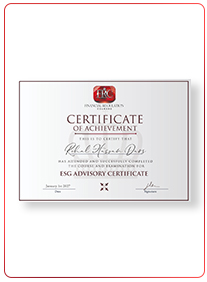
Upon successful completion of the final examination and verification of the student’s identity, a Certificate of Completion will be issued. This certificate serves as formal recognition of the student’s achievement and demonstrates that they have met the required standards of knowledge and competency for the certification programme.
Financial Regulation Courses provides students with a digital Certificate of Completion, which can be easily shared or presented in professional settings. The digital certificate will include the following information:
Student Name: The full name of the individual who completed the course.
Course Title: The name of the certification programme completed.
Date of Completion: The date the student successfully passed the final examination.
Certifying Body: The certifying body or institution associated with Financial Regulation Courses.
The Certificate of Completion can be integrated into the student’s professional profile, allowing them to showcase their new credentials on platforms such as LinkedIn or within their CV. This certification serves as a mark of professionalism and expertise in the student’s chosen field.
In some instances, the Certificate of Completion may be subject to renewal requirements, particularly for certifications tied to professional development or ongoing regulatory changes. Students will be informed of any such requirements during the course, and they are encouraged to undertake any necessary Continuing Professional Development (CPD) activities to maintain their certification.
Students must adhere to the certification guidelines provided to them at the start of the course. These guidelines are designed to ensure that the certification process is fair, transparent, and consistent with the high standards upheld by Financial Regulation Courses.
All students are expected to uphold the principles of academic integrity throughout the certification process. Any violations, such as cheating or falsification of identity, will result in disqualification from the course and may lead to further disciplinary actions.
Students who are found to be in breach of the certification guidelines will face penalties, which may include:
Disqualification from the Course: Immediate disqualification from the course and exam.
Revocation of Certification: In cases where certification has already been issued, it may be revoked if violations of the guidelines are discovered.
Prohibition from Future Courses: Students who breach the guidelines may be prohibited from enrolling in future certification programmes offered by Financial Regulation Courses.
The certification policy is designed to ensure the integrity and professionalism of the certification process. By completing all course modules, passing the final examination, and adhering to the proctoring and verification procedures, students will earn a Certificate of Completion that reflects their competence, integrity, and commitment to their professional development.
Be the first to know about new class launches and announcements.


Financial writer and analyst Ron Finely shows you how to navigate financial markets, manage investments, and build wealth through strategic decision-making.
See why leading organizations rely on FRC for learning & development.